
Hungry kids can turn a flight delay, traffic jam, or hotel check-in into a much bigger adventure than anyone planned. A little snack strategy helps: pack familiar favorites, keep the mess manageable, and save a few easy meals for the moments when restaurant prices or long lines feel like one more thing. Here are practical ideas for plane rides, car rides, hotel rooms, and theme park days, plus simple ways to avoid unnecessary food stops.
Affiliate disclosure: This post may contain affiliate links. If you make a purchase through one, Packed for Fun may earn a commission at no extra cost to you. As an Amazon Associate, we earn from qualifying purchases. Recommendations are chosen based on real-world family travel experience and thorough testing.
Plane ride snacks: simple, low-mess, and easy to screen
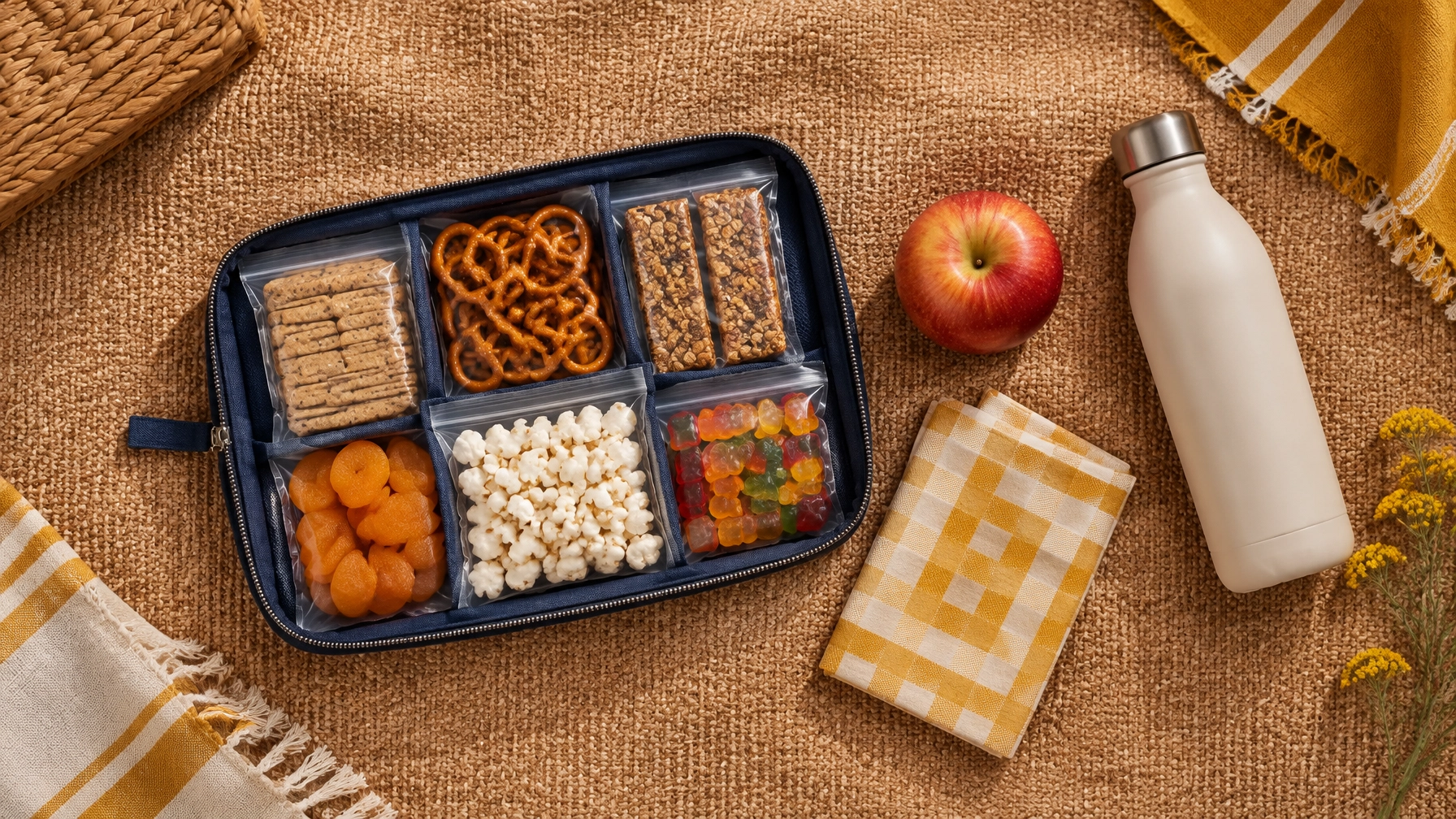
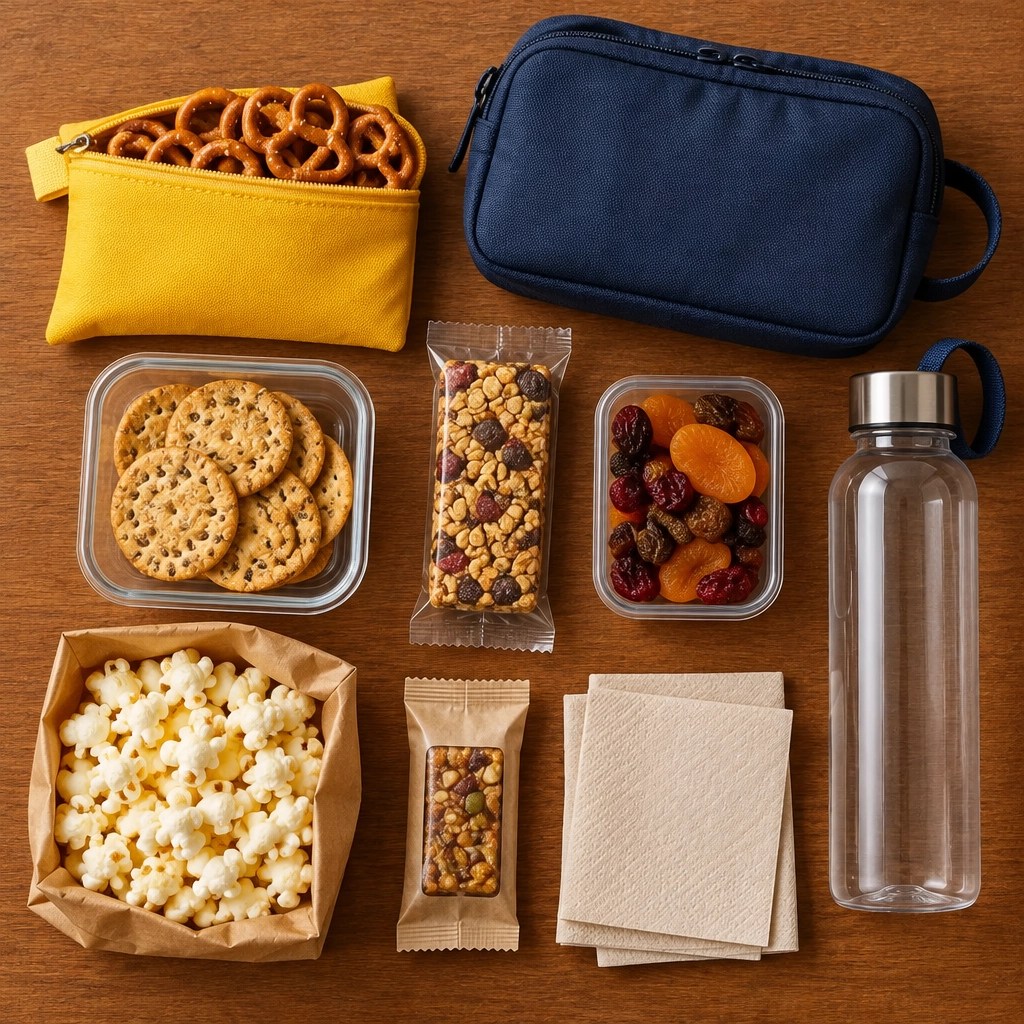
For airport travel, start with solid foods that are easy for little hands to manage: crackers, pretzels, popcorn, granola bars, dried fruit, gummies, or a sandwich. Whole fruit can work well, too. Pack a few different options so a child who suddenly turns down their usual favorite still has a backup.
TSA generally allows solid foods through security. Foods that are liquid or gel-like (including yogurt, applesauce, hummus, and many squeeze pouches) are subject to the liquids rule: containers must generally be 3.4 ounces (100 mL) or smaller and fit in a quart-sized bag. There are separate allowances for baby and toddler food, formula, and breast milk. Check the TSA’s current food guidance before your trip, since screening decisions can vary.
An empty refillable water bottle can go through screening; fill it after security. Buying a drink in the terminal can also be easier than trying to carry liquids through the checkpoint.
During takeoff and landing, swallowing and chewing may help some children manage ear pressure. Offer a drink in a sippy cup, or an age-appropriate chewy snack or lollipop if your child can safely have one. Avoid hard candies and other choking hazards for children under four, and supervise young kids while they eat.
For a less chaotic flight:
- Give each child a small snack pouch they can reach and manage.
- Choose one-handed foods that aren’t sticky or especially crumbly.
- Save one or two “surprise” snacks for a delay or a tough stretch.
- Keep wipes and a small trash bag easy to grab.
Car ride snacks: portion first, cruise calmer
The best road trip snack system is simple: portion snacks before you leave, then offer them at planned times instead of handing over the whole stash at the first “I’m hungry.” A small snack flight (a few bites each of fruit, something crunchy, and a filling favorite) can make a rest stop feel like a treat.
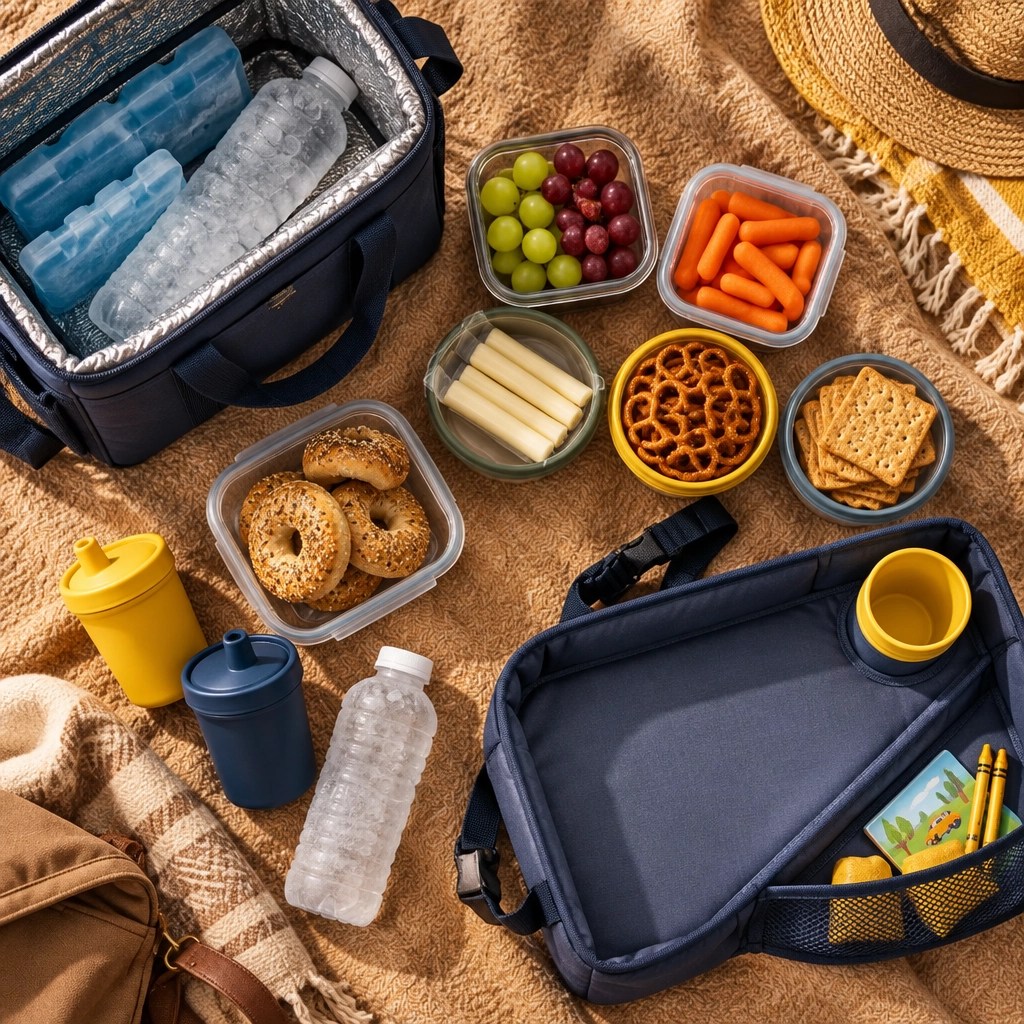
Low-crumb, easy-to-pack choices include string cheese, cut fruit in a leakproof container, crackers and cheese, pretzels, baby carrots, mini bagels, and dry cereal. For cold foods, use a cooler or insulated bag with frozen water bottles or ice packs. The bottles can help keep food cold and become drinking water as they thaw.
Try a small container or lidded snack cup to contain spills. A kids’ travel tray for the car can give children a place for snacks and activities, but it should never interfere with their car seat, harness, or safe positioning.
Schedule snack breaks around rest stops where possible. For younger children, be especially careful about choking hazards, and avoid giving food they can’t safely manage while the car is moving. Pull over when a child needs help or a proper break.
For more ways to keep the miles moving, see our guide to Road Trip Games for Kids: 20+ Screen-Free Ideas That Make the Miles Fly By.
Hotel room snacks: make breakfast easy
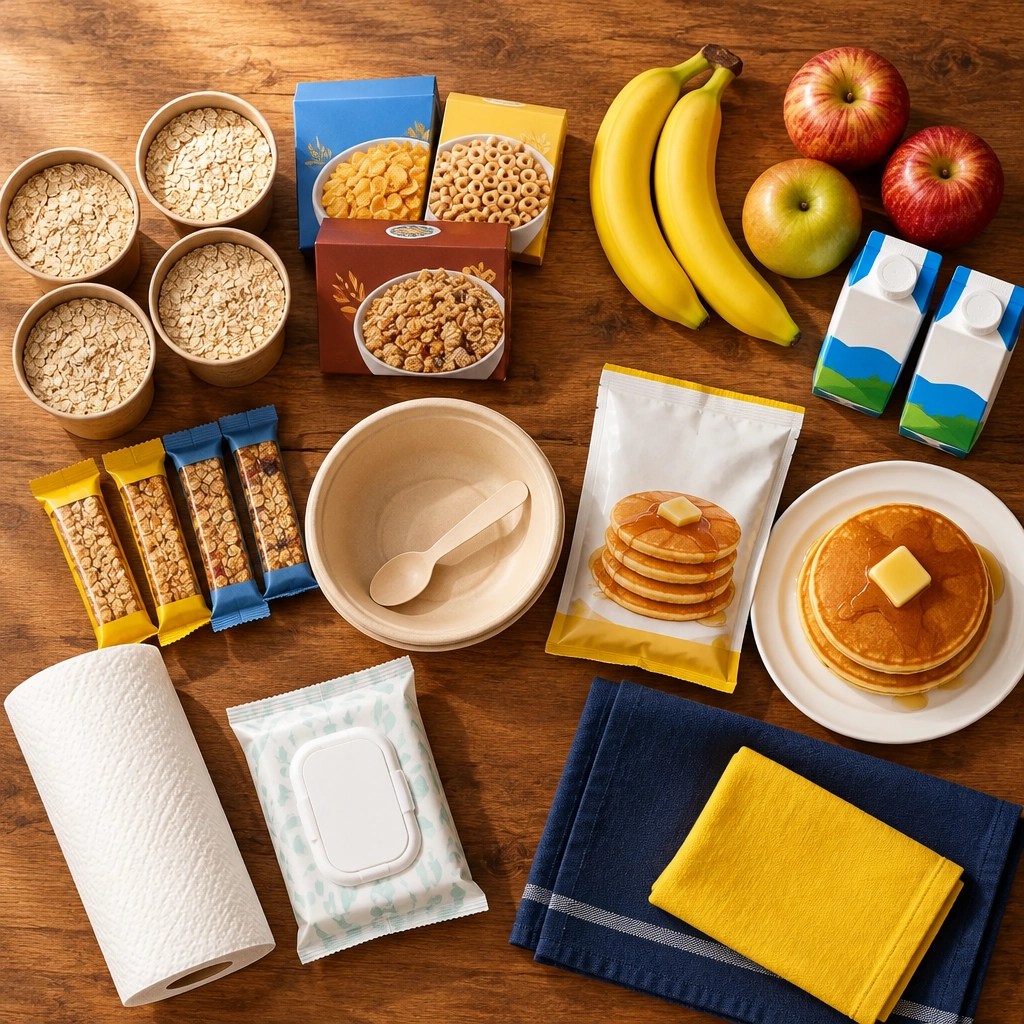
A few grocery-store basics can make hotel mornings less rushed, and reduce the temptation to buy breakfast for everyone on the way out. Try oatmeal cups, cereal, fruit, granola bars, or shelf-stable milk. If your room has a kitchenette, instant pancake mix can be a handy option.
Think of it as a simple breakfast station: put out bowls, spoons, napkins, fruit, and the day’s cereal or oatmeal where everyone can reach them. Before you book, ask whether your room has a mini-fridge or microwave; don’t assume either is included.
A microwave can help with oatmeal, rice cups, or a simple quesadilla. For a relaxed evening, bring popcorn for movie night if you have a suitable way to prepare it. You can also offer a small “appetizer hour” in the room (crackers, fruit, or another snack) to take the edge off hungry kids before dinner.
Keep the setup tidy with paper towels, a few disposable bowls, and wipes. A couple of compact travel wipes can be useful for sticky hands and quick cleanup.
Theme park meals: plan the cooler before you pack it
Packing lunch can reduce food costs, but first check the exact park’s current outside-food and cooler rules. Policies differ, and exceptions for items such as baby food or medically necessary foods may apply. For example, Walt Disney World’s property rules list size limits for bags and coolers and prohibit loose or dry ice; Universal Orlando’s policies describe restrictions on outside food and beverages, with exceptions. Always confirm directly with your destination before you go.
If your park allows outside food, pack sandwiches made the night before, whole fruit, crackers, granola bars, and refillable water bottles. Freeze water bottles or juice boxes to help keep the cooler cold, and keep perishable foods chilled. Never leave sandwiches, dairy, or cut fruit in a hot car for an extended period: use an adequately packed cooler, keep it closed and out of direct sun, and follow food-safety time limits.
Some families keep a cooler in the car and return for lunch or tailgate, but that only works if parking, park re-entry, and the cooler policy make it practical. If the car is far away, it may be easier to pack foods allowed inside the park. Refill water bottles at park fountains where available.
Illustrative budget example: Suppose two adults spend $18 each and two children spend $10 each on lunch, then the family buys a $6 snack for everyone. That’s $80 before drinks. A packed lunch and snacks might cost around $27 in groceries, a potential difference of about $53. Actual prices and savings vary by park and family.
For hot days, skip chocolate unless it’s packed to stay cool; it can melt quickly. Portion snacks into per-kid bags to make them easy to find, and try a one-splurge-treat plan: bring the rest from home, then let each child choose one special park treat.
A few snack-planning habits that help anywhere
- Keep a dedicated snack bag stocked with napkins, wipes, and a small trash bag.
- Buy more food after you arrive instead of packing a long-trip supply from home.
- Separate allergy-safe snacks and check ingredient labels.
- Choose foods that match each child’s age and eating abilities; supervise young children.
- If you use packing cubes for family travel or another organizer option, set one aside for clean, shelf-stable snack supplies, not loose or unsealed food.
- Use hand wipes when a sink isn’t nearby, and follow the product directions.
For more family travel tips, including help building a kids packing list and planning your next trip, visit our guide to The Ultimate Guide to Family Vacation Planning.
A few snacks won’t solve every travel-day wobble, but having the right food within reach can prevent a lot of last-minute scrambling. Pack for the journey you’re taking, keep food safe, and check the latest TSA and park rules before you leave.