
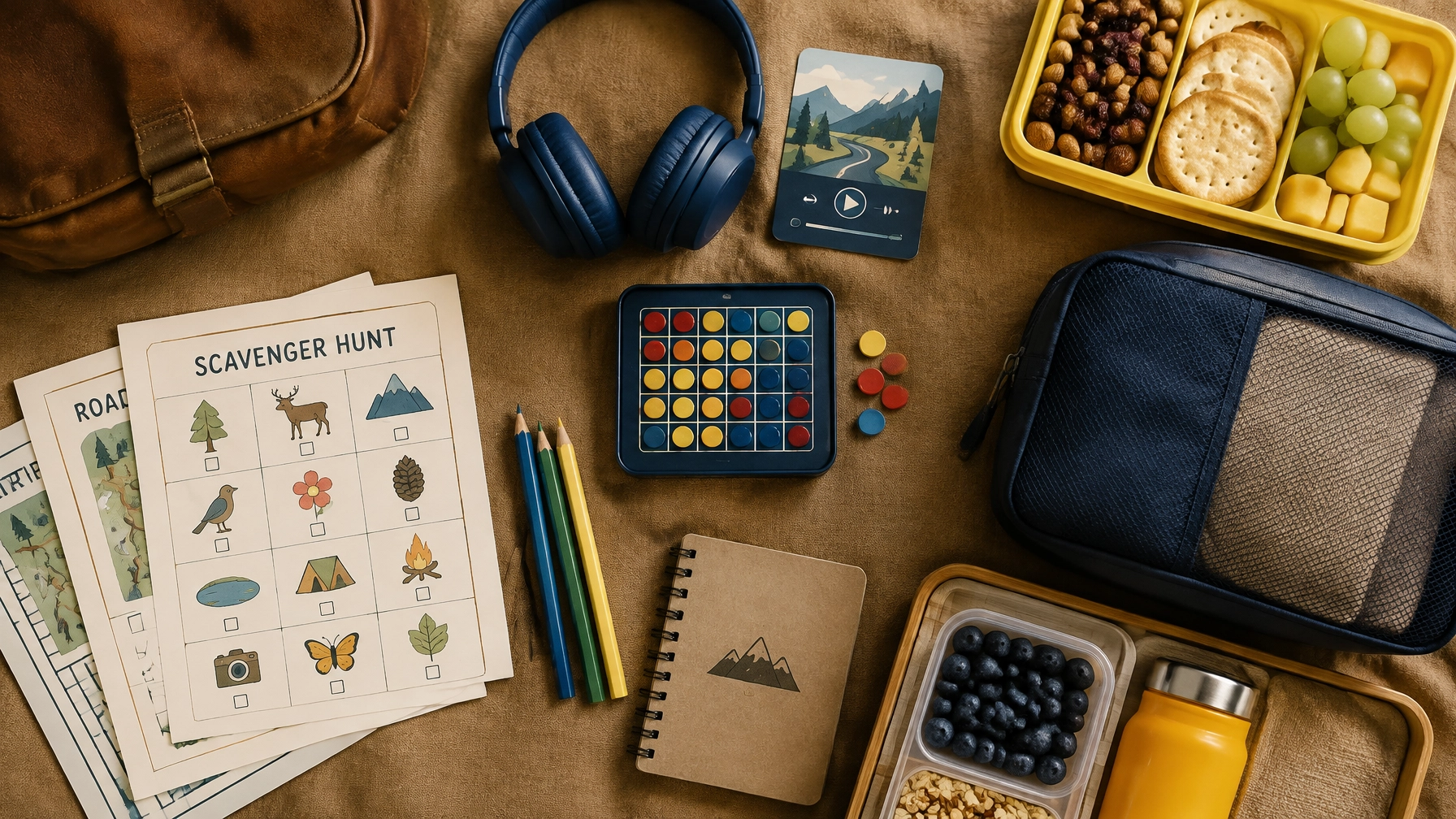
The longest part of a family road trip is often the middle: no exciting landmarks, no rest stop in sight, and plenty of “Are we there yet?” These screen-free road trip games for kids, simple travel toys, audio ideas, and easy activity-kit strategies can turn those slow stretches into calmer, more connected miles.
Affiliate disclosure: This post contains affiliate links. Recommendations are chosen based on real-world family travel experience and thorough testing. If you purchase through one of these links, we may earn a commission at no additional cost to you.
A successful car activity does not need to be complicated.
The best options are easy to explain, possible from a car seat, and simple enough that kids can manage them without asking an adult for help every two minutes. Mix a few classic games with paper activities, audio entertainment, snacks, and carefully chosen family travel gear.
For more help planning the entire trip, see The Ultimate Guide to Family Vacation Planning.
Classic road trip games for kids
These games require little or no gear, making them perfect for the beginning of a drive or whenever everyone needs a reset.
1. License plate hunt
Choose a goal before leaving: find plates from five states, spot every letter of the alphabet, or look for a plate beginning with each letter of the child’s name. Younger children can simply look for different colors or count how many plates they see.
2. I Spy
Keep it simple for younger children: “I spy something blue.” For older kids, add clues about shape, location, or function. To avoid frustration, give one extra clue after a minute or two.
3. The alphabet game
Look for letters on signs, billboards, trucks, and storefronts in alphabetical order. Decide ahead of time whether license plates count. A cooperative version works well when siblings are prone to arguing: everyone works together toward one shared A-to-Z challenge.
4. 20 Questions
One person thinks of an animal, food, place, or object. Everyone else asks yes-or-no questions until they guess it. For younger kids, limit the categories to make the game more manageable.
5. Would You Rather?
Ask funny, low-stakes questions such as, “Would you rather have a pet dinosaur or a pet dragon?” Let kids create their own questions, too. This is one of the easiest ways to keep a conversation going without needing supplies.
6. Story chain
One person begins with a sentence, such as, “On the way to the beach, we found a mysterious suitcase.” Each person adds one sentence. Keep a phone or notebook nearby only if someone wants to record the story at a rest stop.
7. Name that tune
Hum or whistle a familiar song without using words. Kids guess the song, then take turns performing. If your family enjoys music, make a playlist of songs everyone knows before leaving home.
Paper and printable activities
Paper games are inexpensive, lightweight, and easy to customize for the ages and interests of your children.
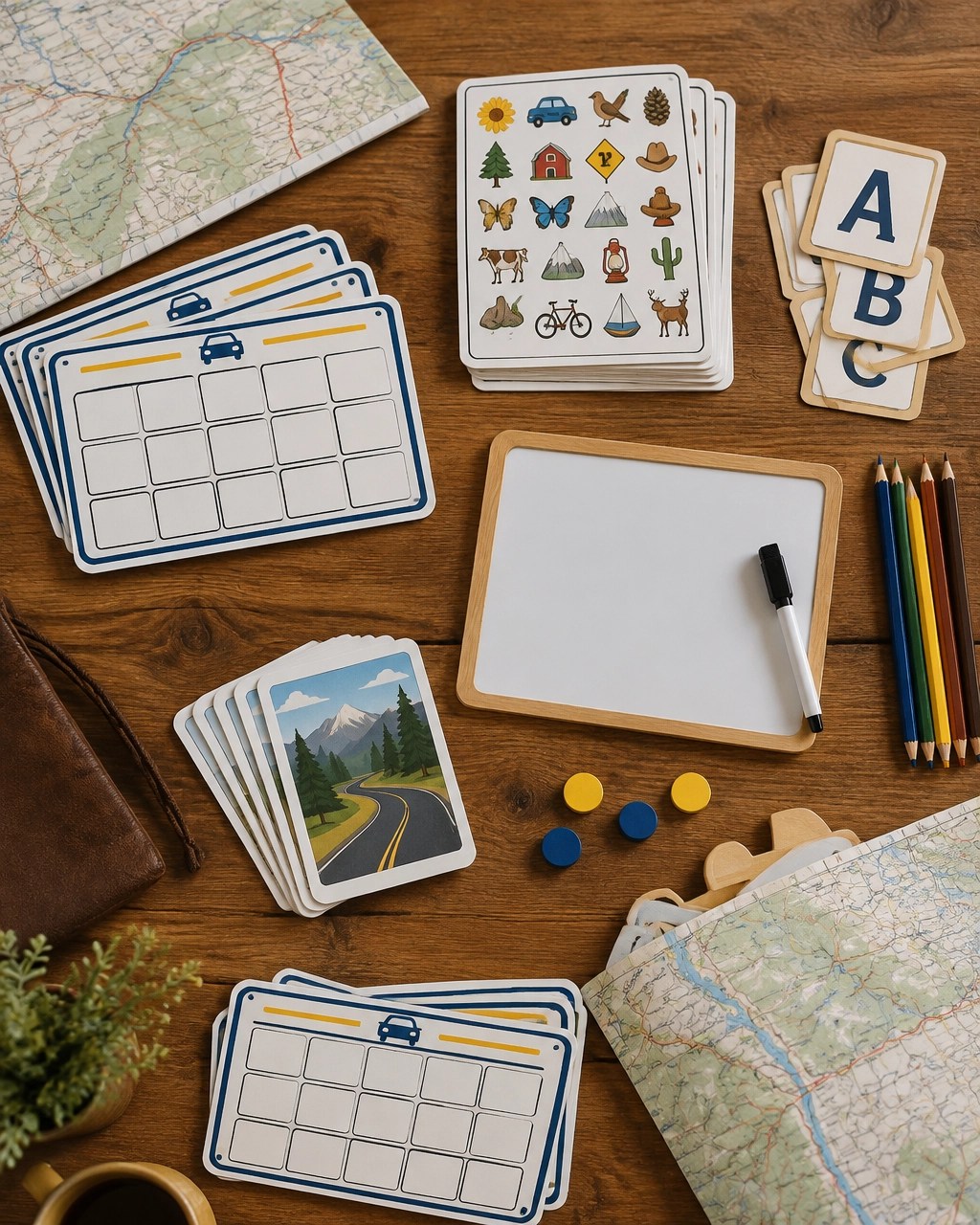
8. Road trip bingo
Create a bingo card with things kids may spot from the window: a red barn, motorcycle, bridge, cow, water tower, train, or yellow truck. Use reusable sleeves and dry-erase markers so the cards work on the way home, too.
9. Scavenger hunt checklist
Make a list of items to find in order or at random. Try categories such as “things that fly,” “things with wheels,” or “things that begin with S.” For younger kids, include simple drawings instead of words.
10. Drawing prompts
Offer prompts that connect to the trip: “Draw our hotel,” “design a new road sign,” or “invent a restaurant for aliens.” A small sketchbook is easier to manage than loose paper.
11. Activity books
Puzzles, mazes, dot-to-dots, and drawing pages are reliable quiet-time options. An On The Plane Activity Book can work just as well in the car, especially for preschool and early elementary travelers.
12. Travel journals
Ask kids to record one thing they saw, one thing they heard, and one question they have. Older children can track mileage, weather, favorite snacks, or stops along the route.
13. Hangman and tic-tac-toe
Use a notebook or small whiteboard. To make hangman more educational, choose words connected to the destination, animals, landmarks, or foods you may encounter.
14. License plate word builder
Use letters from a passing license plate to create as many words as possible. For younger kids, ask them to name words that begin with one selected letter.
Magnetic travel games and compact toys
Small, contained activities are some of the most useful travel toys for kids because they are easier to play with on a lap or tray.
15. Magnetic board games
Magnetic pieces are less likely to slide under a seat than traditional game pieces. A Hasbro Gaming Magnetic Game Travel Set includes several familiar games in a tin, while this four-pack of kids’ travel board games offers options such as Battleship, Connect 4, Guess Who?, and Hungry Hungry Hippos.
16. Mini magnetic tiles
A small magnetic building set gives kids open-ended play without needing a large bin of bricks. Try this mini magnet tiles toy, but check the age guidance carefully and avoid small pieces for children who still mouth toys.
17. Sticker scenes
Sticker activities are quiet and require less coordination than coloring in a moving vehicle. The Melissa & Doug Seek & Find Sticker Pad gives children a themed search-and-place activity they can revisit.
18. Doodle tablets
For children who love to draw, LCD Doodle Tablets provide a reusable, low-mess activity without a pile of paper. Pack one per child to reduce turn-taking disputes.
19. Mess-free coloring
Markers and car upholstery are not a relaxing combination. The Crayola Color Wonder Mess Free Coloring Activity Set uses special paper designed to keep the color on the pages, making it a practical choice for younger artists.
20. Small figures or vehicles
Choose one or two favorite figures, cars, or animals rather than an entire toy box. Kids can create a story, sort them by color, or use them as characters in the story chain game.
Audio entertainment without a screen
Audiobooks, children’s podcasts, music, and family-friendly radio shows give everyone a break from visual activities. Download content before leaving because rural routes may have unreliable service.
Choose a chapter book that appeals to multiple ages, or alternate between an audiobook and short podcasts. Headphones can help siblings listen to different content, but keep the volume comfortable and make sure children can still hear important instructions from the adults.
A quiet rest period is also entertainment. A kids neck pillow with sleep eye mask can make it easier for children to nap during the least exciting part of the drive.
Snack-and-play strategies
Snacks can be part of the activity plan, not just a response to hunger.
- Pack snacks in small portions so children do not finish everything in the first hour.
- Offer a “snack flight” with a few different textures or flavors.
- Use a snack as a transition between activities.
- Choose low-crumb options when possible.
- Keep water accessible, but plan restroom stops before handing out extra drinks.
For families managing motion sensitivity, avoid activities that require prolonged downward focus. Looking out the window, listening to audio, taking breaks, and following your child’s healthcare provider’s advice may help. Some families also pack a product such as Travel Ease Junior Motion Sickness Kids Roll On, but read the label carefully and speak with a pediatrician before using any motion-related product.
Pack an activity kit kids can manage
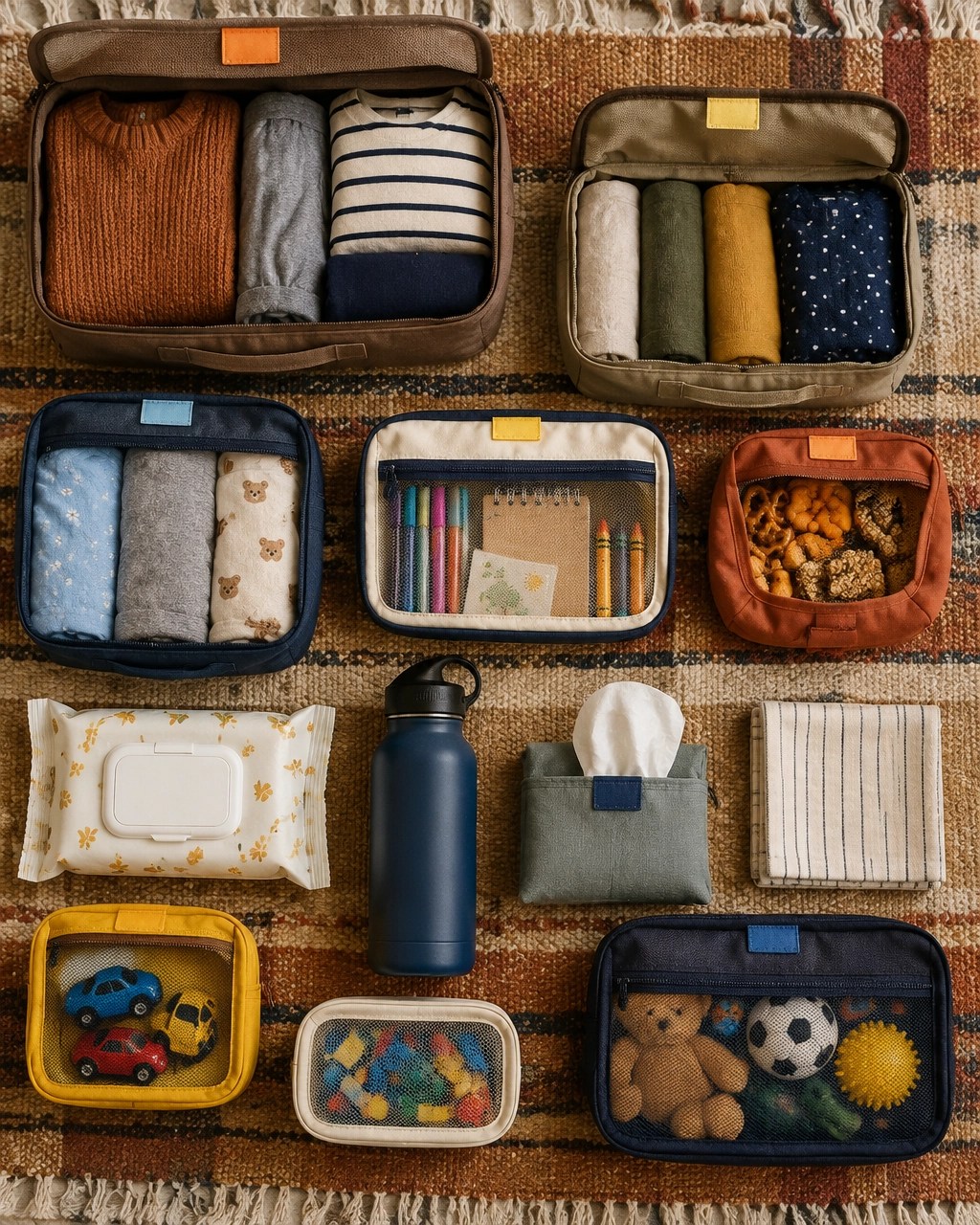
The best kids packing list includes more than clothes. Create one small activity kit per child, then place the kits where children can reach them safely.
Use a labeled pouch or packing cube for each child. These packing cubes for family travel and additional packing-cube option can help separate activities from clothes and make family luggage easier to manage.
A simple kit might include:
- One notebook or activity book
- Two pencils and an eraser
- One magnetic game or compact toy
- Stickers or a doodle tablet
- Child-sized headphones
- A small comfort item
- One surprise activity saved for later
Keep the next activity out of sight until it is needed. A small “mile marker” system can help: open a new activity after a rest stop, at a scheduled time, or after completing a game.
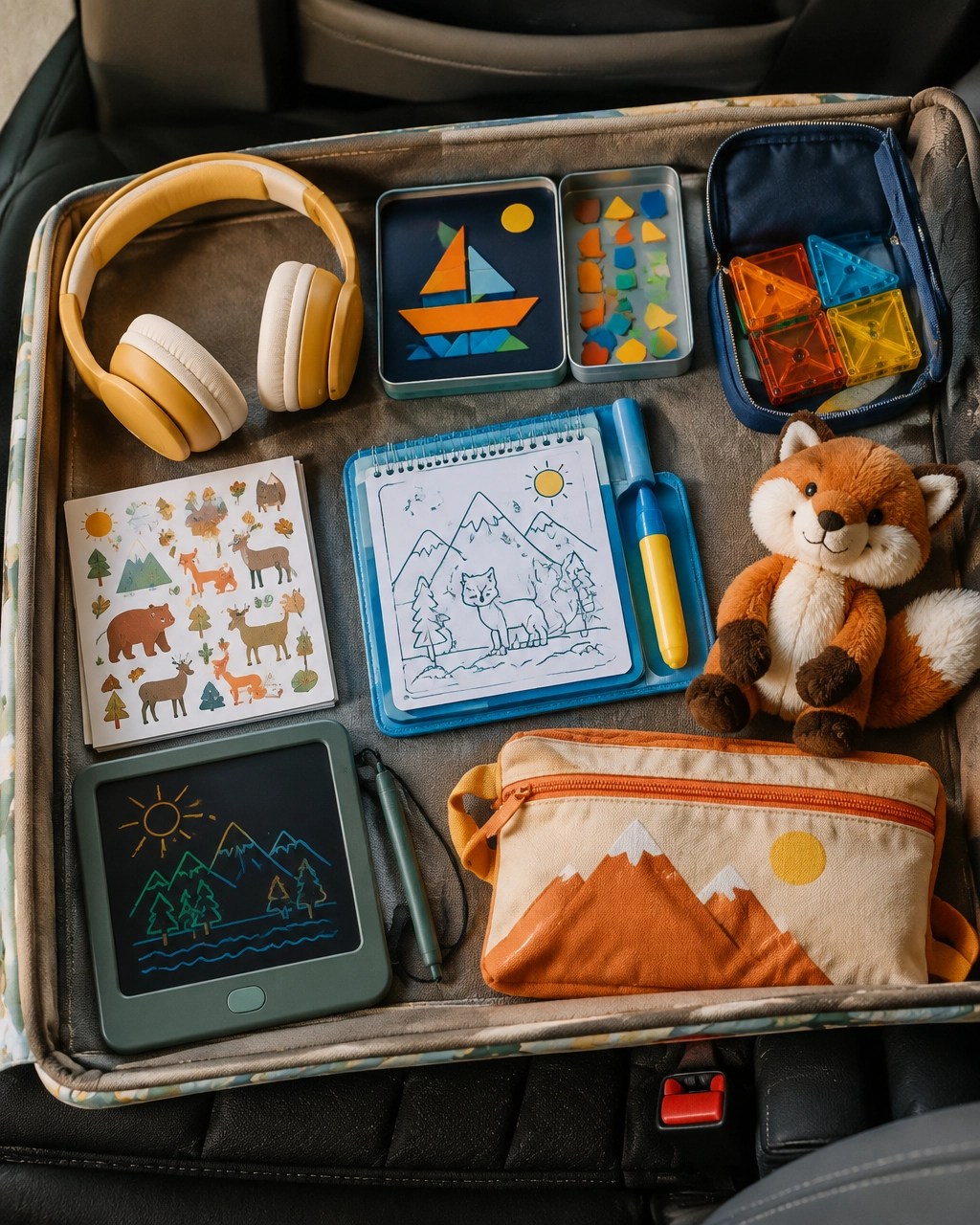
A kids travel tray with activity sheets and pens can provide a more stable surface for drawing and games, but always use it in a way that does not interfere with the child’s car seat or safety restraints.
Keep a cleanup pouch nearby with Impossibly Compact Travel Flushable Wipes for restroom surprises and sticky messes. WipeEssentials Hand Sanitizer Wipes are also useful after snacks, gas-station stops, and playground breaks. Follow each product’s directions and supervise children when using wipes.
Final family travel tips for calmer car rides
You do not need to use every idea on this list. Pick a few options that match your children’s ages, attention spans, and interests. Rotate between looking out the window, talking, listening, playing, snacking, and resting.
Most importantly, plan for breaks. Even the best road trip games for kids cannot replace movement, fresh air, food, and a restroom stop. A flexible plan, accessible family travel gear, and a little variety can make the “Are we there yet?” stretches feel much shorter, and help the whole family arrive with more patience left for the adventure.