
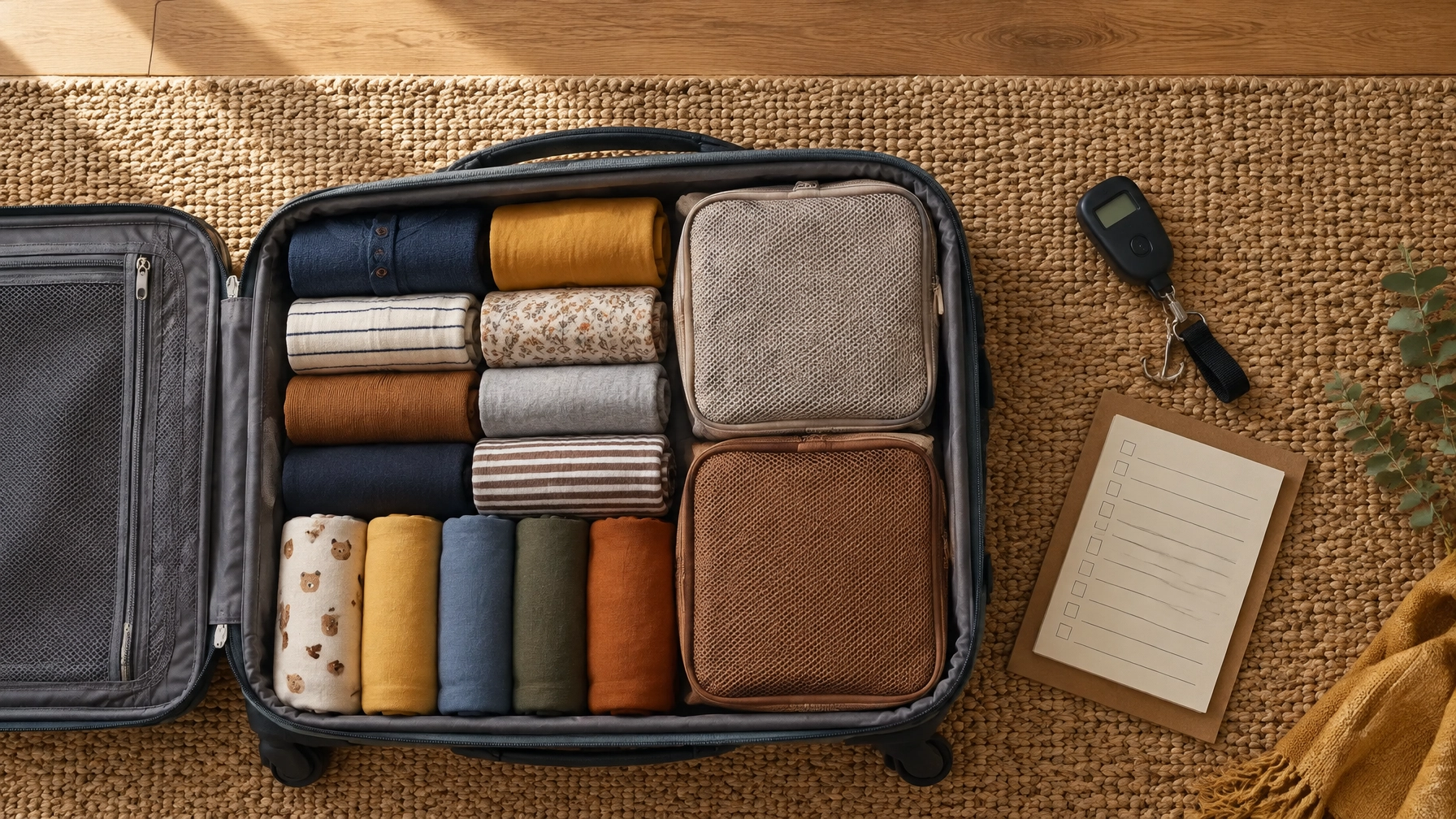
With a few smart choices, your family can pack lighter, make the most of smaller suitcases, and avoid paying for bags you don’t need. The key is to check your airline’s baggage rules before you pack, plan for what your hotel already provides, and make every item earn its space. These practical family luggage tips can help you spend less time wrestling with bags, and more of your travel budget on the trip itself.
Some links in this post are affiliate links. We may earn a commission if you make a purchase, at no extra cost to you. Recommendations are chosen based on real-world family travel experience and thorough testing. As an Amazon Associate, I earn from qualifying purchases.
Start with the baggage-fee math
Airline baggage rules and fees depend on the carrier, route, fare, and when you pay. Some fares include checked luggage or a carry-on; others charge separately. Before booking, check what your tickets include and compare the total cost for your whole family, not just the base fare.
Here’s a simple example: if a checked bag costs $45 each way, four checked bags cost $360 round trip ($45 × four bags × two directions). If your family can manage with one shared checked bag, that example drops to $90 round trip, before any other fees. Your airline’s actual price may be different, so confirm it for your itinerary.
| Bags checked for a family of four | Example round-trip cost at $45 each way |
|---|---|
| One bag per person (4 bags) | $360 |
| One shared bag | $90 |
If you’re flying on a fare that charges for overhead carry-ons, add those fees to the comparison too. Sometimes one checked bag is cheaper, and easier to manage, than buying several carry-on allowances. On other airlines, free carry-ons make it worthwhile to divide belongings between travelers.
Check bag size and weight rules before packing
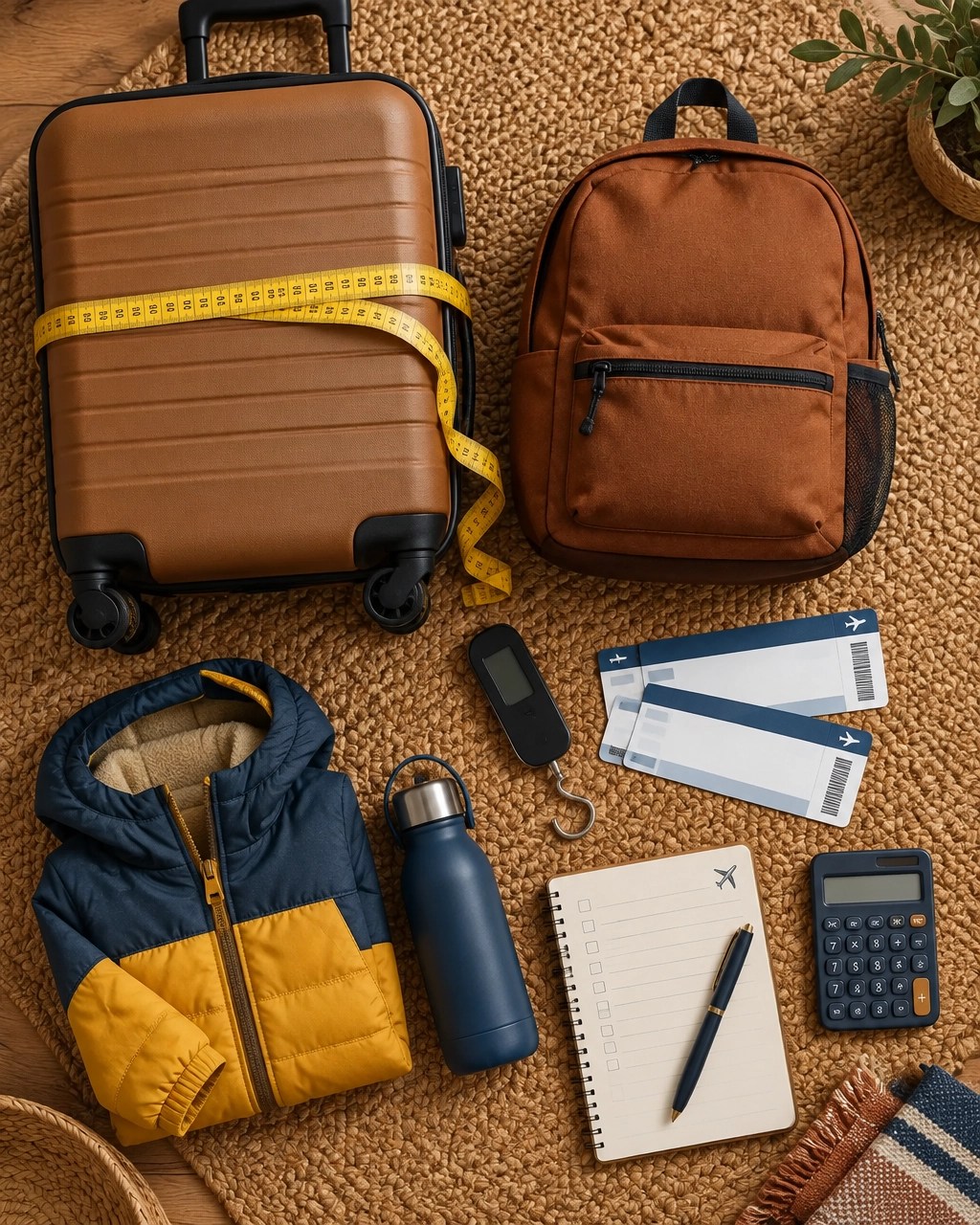
A personal item usually means a small backpack, tote, or purse that fits under the seat. A carry-on is larger and goes in the overhead bin. The permitted dimensions vary by airline, and some basic or budget fares restrict which bags are included. Measure your bag when it’s packed, including wheels, handles, and pockets, and check the rules for the airline actually operating your flight.
For checked bags, look up both the weight and size limits. Weigh each bag at home with a luggage scale or bathroom scale, leaving a little room under the limit in case the scale at the airport reads differently. Repacking at the check-in counter is a stressful way to start a vacation.
A soft-sided spinner such as the Travelpro Maxlite 5 21-inch carry-on may suit travelers whose fare includes an overhead bag. For a bag designed to fit beneath the seat, consider a lightweight underseat travel tote, but verify its dimensions against your airline’s current personal-item allowance. If your family prefers to check luggage, compare a 28-inch expandable checked bag with a 25-inch checked spinner, keeping in mind that larger bags are easier to overpack and push over the weight limit.
Roll clothes to use space efficiently
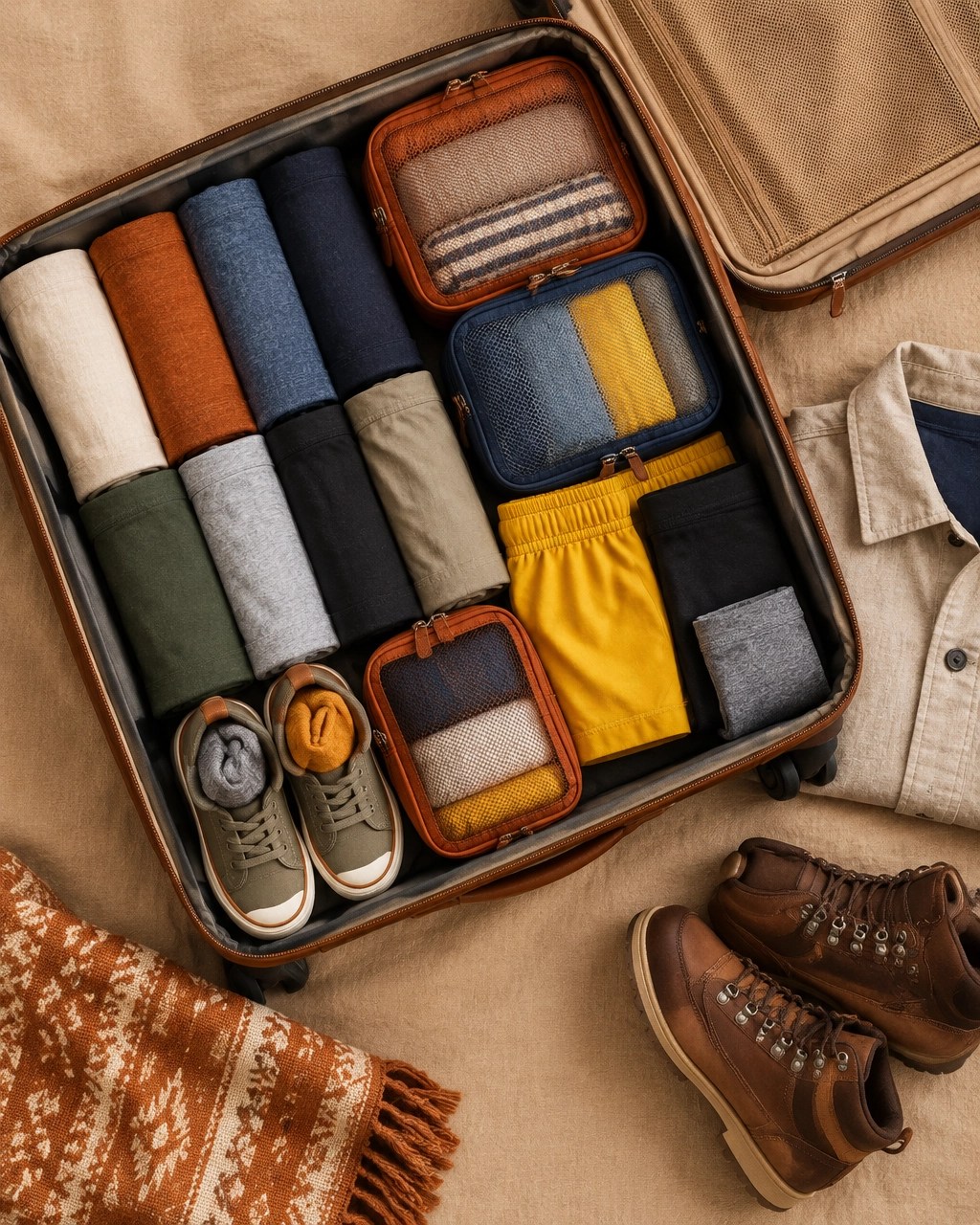
Rolling soft clothes can help you fit more into a small suitcase because rolled items nest together and fill gaps around shoes and corners. It can also make it easier to see what you packed without lifting a stack of folded shirts.
Rolling works especially well for T-shirts, leggings, pajamas, athletic clothes, and children’s outfits. Folding may be a better choice for stiff or easily wrinkled clothing, like button-down shirts, dresses, and structured trousers. A useful approach is to roll everyday clothes and fold the pieces you want to keep smooth.
Packing cubes help keep each person’s items together and make the suitcase easier to unpack. Try assigning a color or cube to each child, or sorting by clothing type. These packing cubes for family travel and another packing-cube option can help organize a shared suitcase. Compression cubes may reduce the volume of soft clothing, but they don’t reduce its weight, so still weigh the bag.
Pack around laundry, not one outfit per day
Packing for every possible outfit is a common way to end up with extra bags. Instead, choose mix-and-match clothes and plan a laundry stop in the middle of the trip. A hotel laundry room, local laundromat, or quick sink wash can make a smaller wardrobe work for a longer vacation.
Before you leave, make a simple kids packing list with the number of outfits, sleepwear, and essentials each child needs. Add a spare outfit to your carry-on for spills or delays, but resist packing several “just in case” outfits for every day.
Wear your bulkiest comfortable layers on travel day. Jackets and boots can take up a surprising amount of suitcase space; wearing them frees that space for items you’d otherwise have to pack. You can remove a jacket once you’re on the plane, but check that your footwear is comfortable for airport walking.
Use hotel toiletries, and ask what’s available
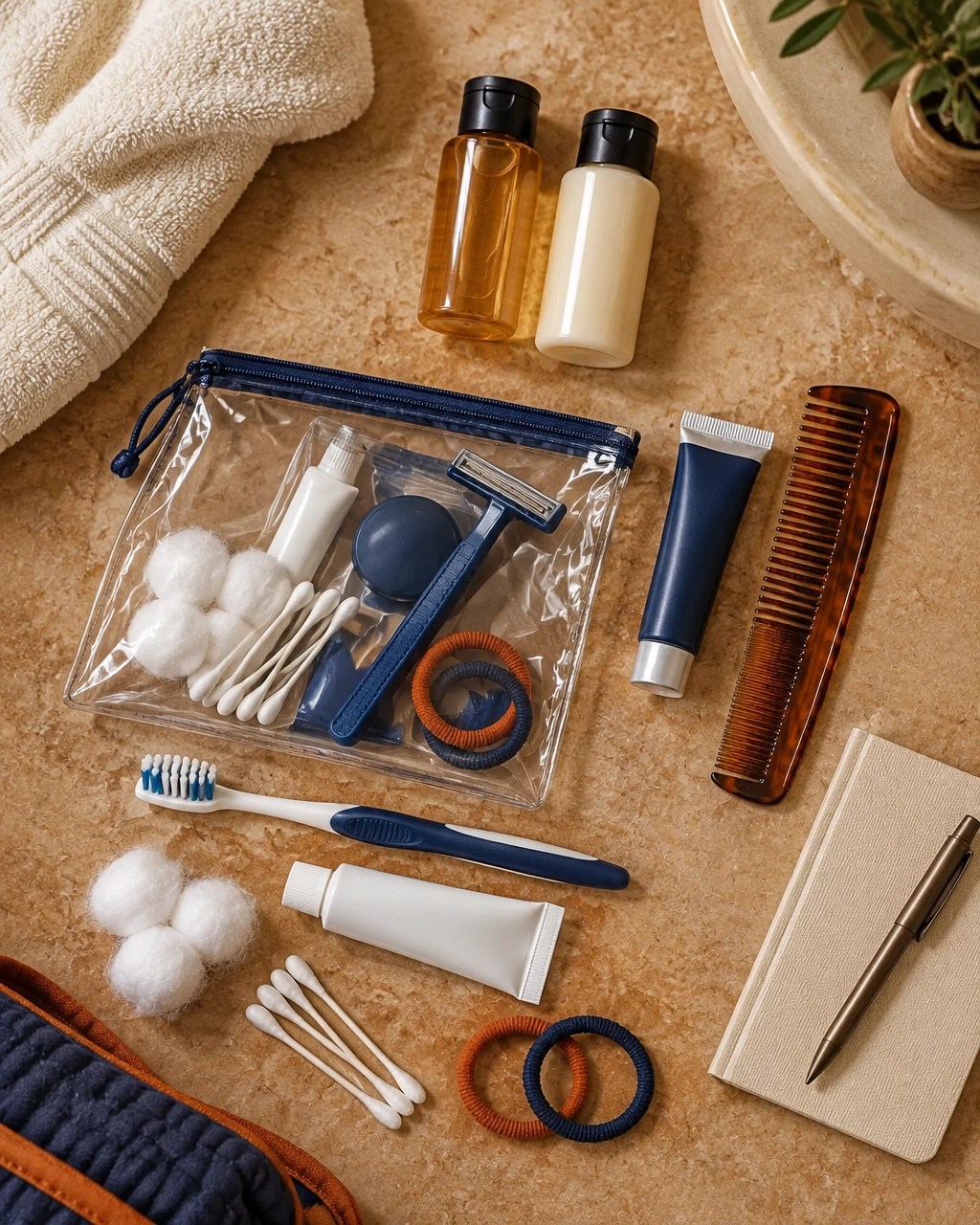
You may not need to pack full-size shampoo and conditioner. Many hotels provide them in the room, sometimes in refillable dispensers. Using what your hotel supplies can save suitcase space and reduce the number of liquids you need to fit into your carry-on. If you prefer particular products, pack only what you need in travel-size containers and follow the current airport security liquid rules.
Hotels may also offer free toiletries at the front desk upon request. Call ahead or ask when you arrive about items such as toothbrushes and toothpaste, disposable shavers, shaving cream, combs, hair ties, cotton swabs, and cotton balls. Availability varies, but asking can save space and the cost of buying travel-size extras.
Before packing, check whether your hotel provides a hairdryer, towels, and an iron. Those are bulky items you can often leave at home. Don’t assume every property has everything, though, confirm in advance if you’ll need a particular item.
Decide whether to carry on, check one bag, or ship ahead
One carry-on per person gives everyone access to their own clothes and essentials, but it can be difficult when you’re also managing children, car seats, and airport transitions. A shared checked bag can be simpler if the fee is reasonable and you distribute a few must-have items among adult carry-ons in case the checked bag is delayed.
For a longer stay, compare the cost and convenience of checking one shared bag with shipping bulky items ahead. Shipping can make sense for some trips, but check delivery timing, hotel package policies, and the total price before relying on it.
If your child will be pulling their own bag, a kids’ ride-on scooter suitcase may make the airport more fun, but check airline sizing rules before you count it as a carry-on. Keep a compact set of in-flight essentials in an adult’s personal item: for example, a kids’ neck pillow, flushable travel wipes, hand-sanitizer wipes, and a mini first-aid kit. If your child needs regular medication, pack it in your cabin bag; a travel medicine kit can help keep supplies organized.
For car journeys before or after your flight, a kids’ travel tray is useful family travel gear, while a motion-sickness roll-on is an optional item to discuss with your child’s healthcare professional.
Make the packing plan work for your budget
Avoiding baggage fees starts before packing day. Compare the full trip cost, including luggage, when you’re choosing flights and accommodations. Once you know your bag allowance, you can decide whether packing lighter, checking one shared bag, or paying for extra baggage makes the most sense.
If you’re still planning the trip, explore Packed for Fun for family travel ideas and practical advice, and check out The Ultimate Guide to Family Vacation Planning for a bigger-picture roadmap. You can also look for flight deals, compare travel options on Trip.com, check Undercover Tourist discounts, or compare car rental discounts as you build your budget.
A lighter suitcase doesn’t require perfect packing. Check the rules, roll the clothes that benefit from it, use the hotel amenities you’ve confirmed, and bring only what your family will actually use. Those small choices can save space, money, and a little pre-trip stress.