
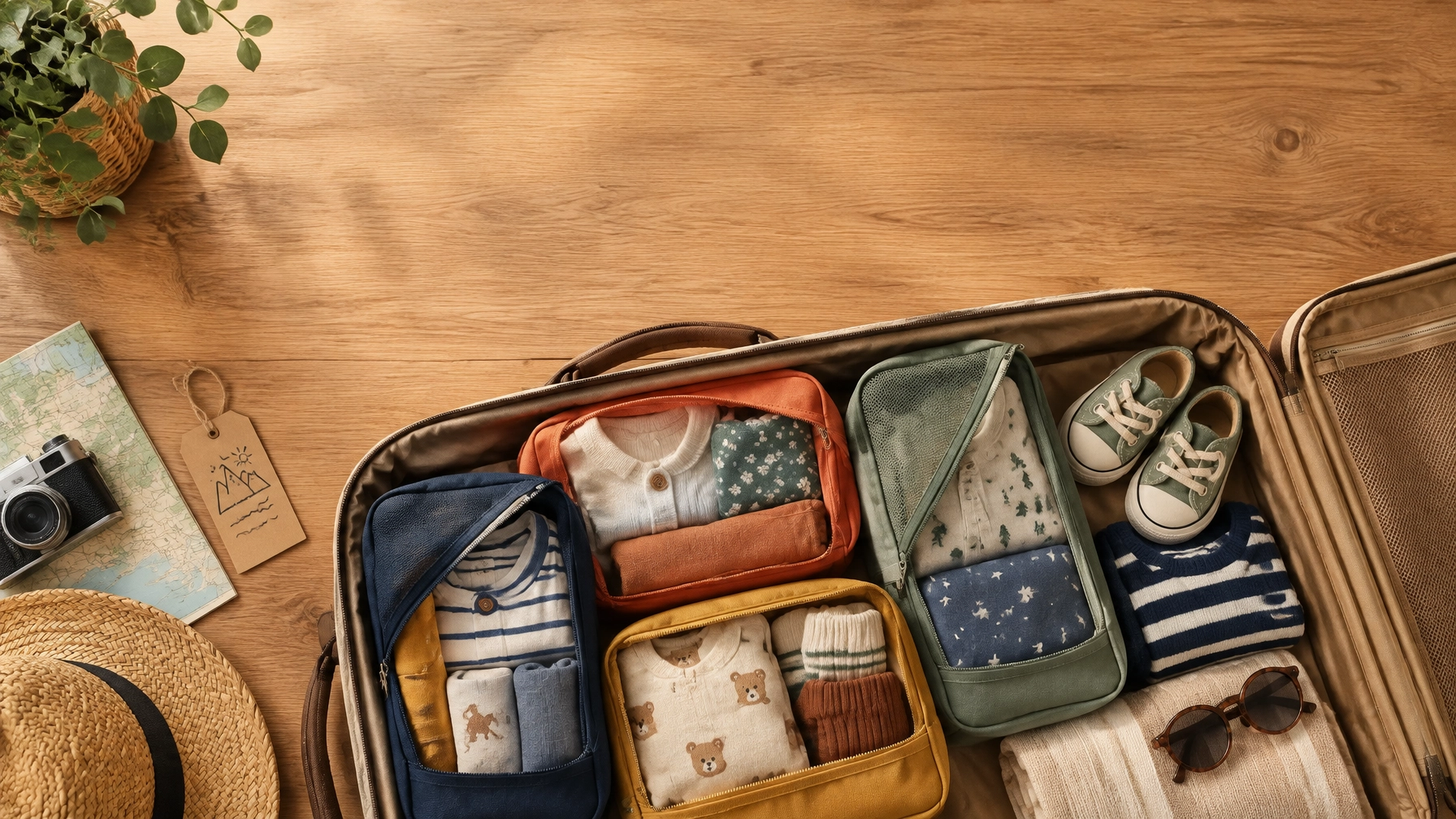
If your family suitcase turns into a clothing avalanche before you even reach the hotel, packing cubes can make a surprisingly big difference. The key is not simply buying a set of organizers. It is giving each child a color and a simple system they can understand. With the right setup, everyone can find their own clothes, dirty laundry stays away from clean outfits, and arrival night no longer requires unpacking the entire suitcase.
To help keep our content free, some links in this post are affiliate links. If you click and buy something, we may receive a small commission (at no extra cost to you). As an Amazon Associate, I earn from qualifying purchases. Every product we recommend was chosen based on real-world family travel experience and thorough testing.
Why shared suitcases fail with kids
A shared suitcase sounds efficient: everyone’s clothes go into one large piece of family luggage, and you save space by packing together. In practice, it often means one child’s socks end up under a parent’s sweater, pajamas disappear beneath swimsuits, and somebody has to dig through every layer to find one clean shirt.
Packing cubes solve the problem by creating smaller, labeled zones inside the suitcase. Instead of searching through one giant pile, each person gets a clearly defined section.
The easiest system is color-coding:
- Parent one: gray
- Parent two: navy
- Child one: yellow
- Child two: green
Use the same color for each person’s cubes whenever possible. Children quickly learn that “green is mine,” while parents can identify what belongs to whom at a glance.
The five-minute-per-kid packing cube system
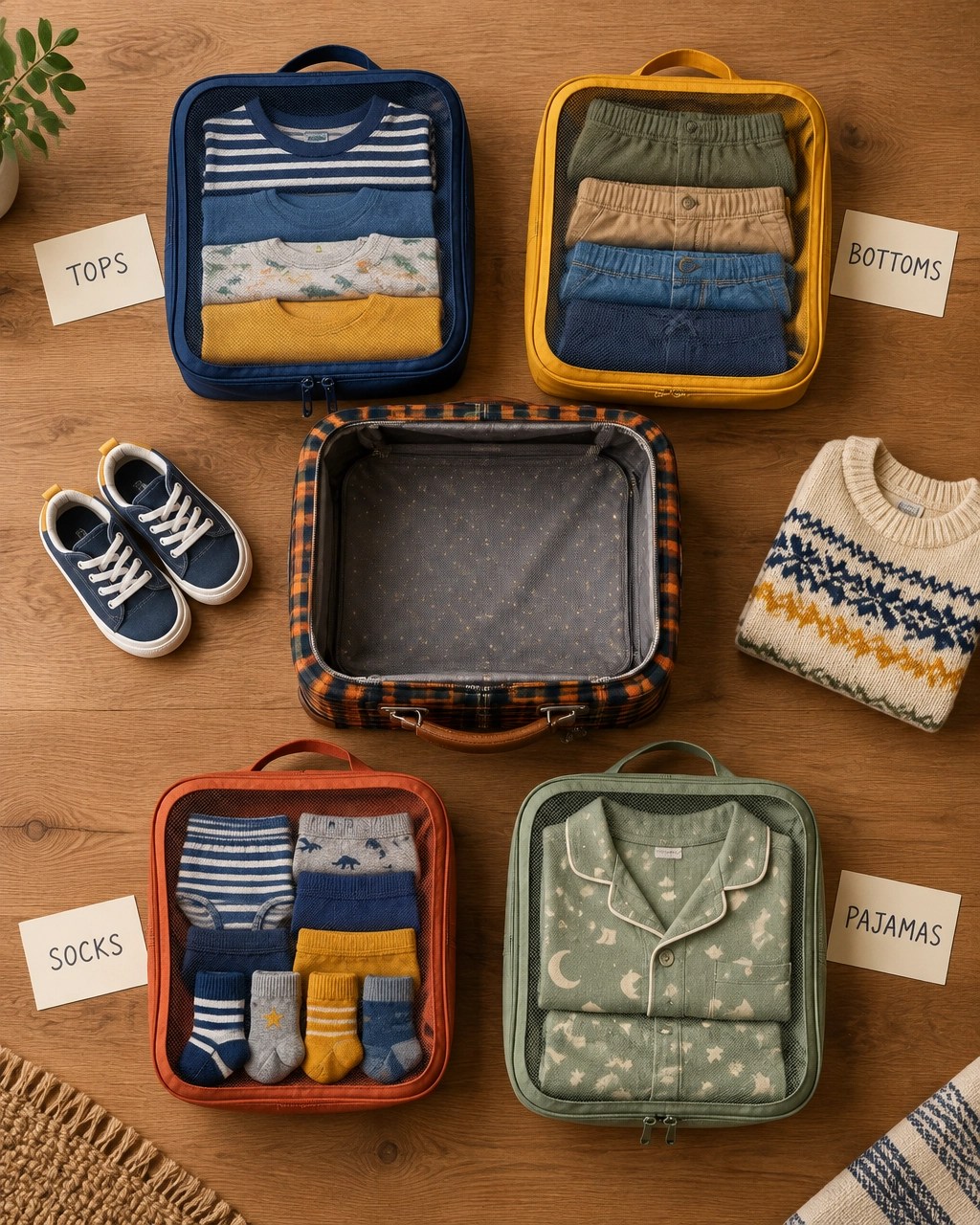
Start with one main clothing cube per child. For a short trip, this cube can hold nearly everything your child needs. Divide it into three simple sections:
- Tops: T-shirts, long-sleeve shirts, or lightweight sweaters
- Bottoms: Shorts, pants, leggings, or skirts
- Underwear and socks: Keep these together in a small pouch or at one end of the cube
Add pajamas either inside the main cube or in a dedicated “first night” cube, depending on the length of your trip.
For younger children, pack complete outfits together. Roll a shirt and matching shorts or pants as a small bundle so they can grab one set without making a mess. For older children, separate clothing by category and let them choose what to wear.
A color-coded compression set such as these multi-size compression packing cubes for family luggage can work well when you want the flexibility to organize categories while also reducing the bulk of soft clothing. Look for a set with different sizes so you can use the largest cube for outfits and smaller cubes for socks, underwear, or accessories.
Try the “one cube per day” method for longer trips
One cube per child works well for a weekend or a short vacation. For longer trips, the one cube per day method can make mornings easier, especially for toddlers and preschoolers who want to pick their own outfits.
Place one complete outfit in each cube:
- Shirt
- Bottoms
- Underwear
- Socks
- Optional hair accessory or small layer
Label the cubes by day or use colors and numbers. For example, a seven-day trip might include cubes marked “Monday” through “Sunday.” Your child can choose one cube each morning without opening the rest of the suitcase.
This approach is particularly helpful when you are moving between hotels. Instead of unpacking everything, take out the next day’s cube and keep the rest contained.
For a family of four, you probably do not need a separate cube for every day unless you are traveling with very young children or changing accommodations frequently. A practical compromise is to pack three or four daily outfit cubes for each child and keep extra underwear, pajamas, and backup clothes in one larger cube.
Compression cubes vs. regular packing cubes
Both types can be useful, but they solve slightly different problems.
Compression packing cubes
Compression cubes have an extra zipper that squeezes the packed clothing into a flatter shape. They are most useful for:
- Sweatshirts and fleece layers
- Bulky children’s clothing
- Cold-weather trips
- Families sharing one or two suitcases
- Longer vacations with limited luggage space
Compression is not magic, though. It reduces volume, not weight. If you pack too much, the cube can become a heavy, awkward brick. Overfilling can also put unnecessary strain on the zippers.
Use compression cubes for soft, bulky items and leave delicate or wrinkle-prone clothing less compressed.
Regular packing cubes
Regular cubes are lightweight organizers without the additional compression zipper. They are often better for:
- Short trips
- Warm-weather clothing
- Toddlers’ smaller outfits
- Swimsuits and accessories
- Families who prioritize quick access over maximum space savings
A lightweight set such as these colorful multi-size travel packing organizers can be useful when each child needs several smaller sections rather than one compressed clothing block.
Add three cubes that prevent arrival-night chaos
The per-kid system is the foundation, but three dedicated organizers make it much more practical.
1. A first-night cube
Pack pajamas, toothbrushes, toothpaste, one change of clothes, and any bedtime comfort item in a cube that stays at the top of the suitcase.
If you arrive late, you can grab the cube and get everyone ready for bed without unpacking. For families with toddlers, add diapers or nighttime pull-ups if needed.
2. A dirty-laundry cube
Dirty clothes should not go back into the same cube as clean clothing. Reserve one cube for laundry, or use a breathable laundry bag inside a larger cube.
Keep it near the suitcase opening so children can place worn clothes inside without digging through everything. At the end of the trip, you can lift out the laundry cube and take it straight to the washing machine.
For beach or pool trips, place wet swimsuits in a sealed wet bag before putting them into the laundry cube. Do not pack damp clothing directly against clean garments.
3. An electronics pouch
Keep charging cables, headphones, power banks, and small devices together in one pouch. This is easier to manage than scattering chargers across several pieces of family luggage.
Store the pouch in an adult’s carry-on or underseat personal item when possible. An underseat carry-on tote is a convenient place for items the family may need during transit.
If you are also packing entertainment for a toddler, our guide to Toddler Airplane Travel Essentials: The 5-Minute Busy Bag That Saves the Flight has ideas for keeping small activities together and easy to reach.
How to pack each cube efficiently
Packing cubes work best when you avoid treating them like miniature suitcases. Use the whole shape of the cube instead of creating one bulky pile in the middle.
- Roll soft, casual clothing: T-shirts, leggings, pajamas, and shorts usually pack efficiently when rolled.
- Fold structured pieces: Button-down shirts, dresses, and sweaters may hold their shape better when folded.
- Bundle complete outfits: This makes mornings faster for younger children.
- Use the edges: Tuck socks, underwear, swimsuits, or small accessories around the sides of larger clothing bundles.
- Do not overfill: Leave enough room for the zipper to close without pulling or catching fabric.
- Place the most-used cube on top: The first-night cube, pajamas, and travel-day layers should be easy to reach.
Before closing the suitcase, arrange cubes like bricks: large cubes on the bottom, medium cubes in the middle, and small cubes around the edges or on top.
Connect the system to a kids packing list
Packing cubes are even more useful when children help prepare them. Give each child a simple checklist based on the trip:
Kids packing list
- Shirts
- Shorts or pants
- Underwear
- Socks
- Pajamas
- Light jacket or sweater
- Swimsuit
- Shoes
- Hat or sunglasses
- One special comfort item
You can let younger children place each item on the bed while an adult checks the quantity. Older children can pack their own cube, zip it, and place it in the suitcase.
Once children are responsible for one color-coded cube, they also know where their belongings are during the trip. Older kids may even be ready to carry their own small suitcase or backpack.
For more help organizing the entire trip, not just the suitcase, see The Ultimate Guide to Family Vacation Planning.
How many packing cubes does a family of four need?
You do not need a dozen cubes per person to get started. For a typical family of four:
- Minimum setup: Four main clothing cubes, one per person
- Practical setup: Six to eight cubes, adding a first-night cube and a laundry cube
- Longer or cold-weather trip: Eight to twelve cubes, including extra daily outfit cubes and compression cubes for bulky layers
Pair the system with the right suitcase:
- A 21-inch softside carry-on spinner works well for shorter trips and easier lifting.
- A 28-inch hardside suitcase gives you more room for road trips, winter layers, or longer stays.
- An underseat tote is useful for medications, snacks, electronics, and the first few travel essentials.
The goal is not to fill every available inch. The goal is to make every item easy to find.
The takeaway: give every child a color and a cube
The best packing cubes for family travel are the ones that create a system your family will actually use. Assign each child a color, start with one main cube per child, and separate dirty laundry and first-night essentials from the rest.
Once kids know which cube is theirs, they can help pack, choose outfits, repack their belongings, and eventually carry their own gear. That small bit of structure can turn family luggage from a shared clothing pile into a calm, functional system.
For more practical family travel tips, visit the Packed for Fun homepage.